
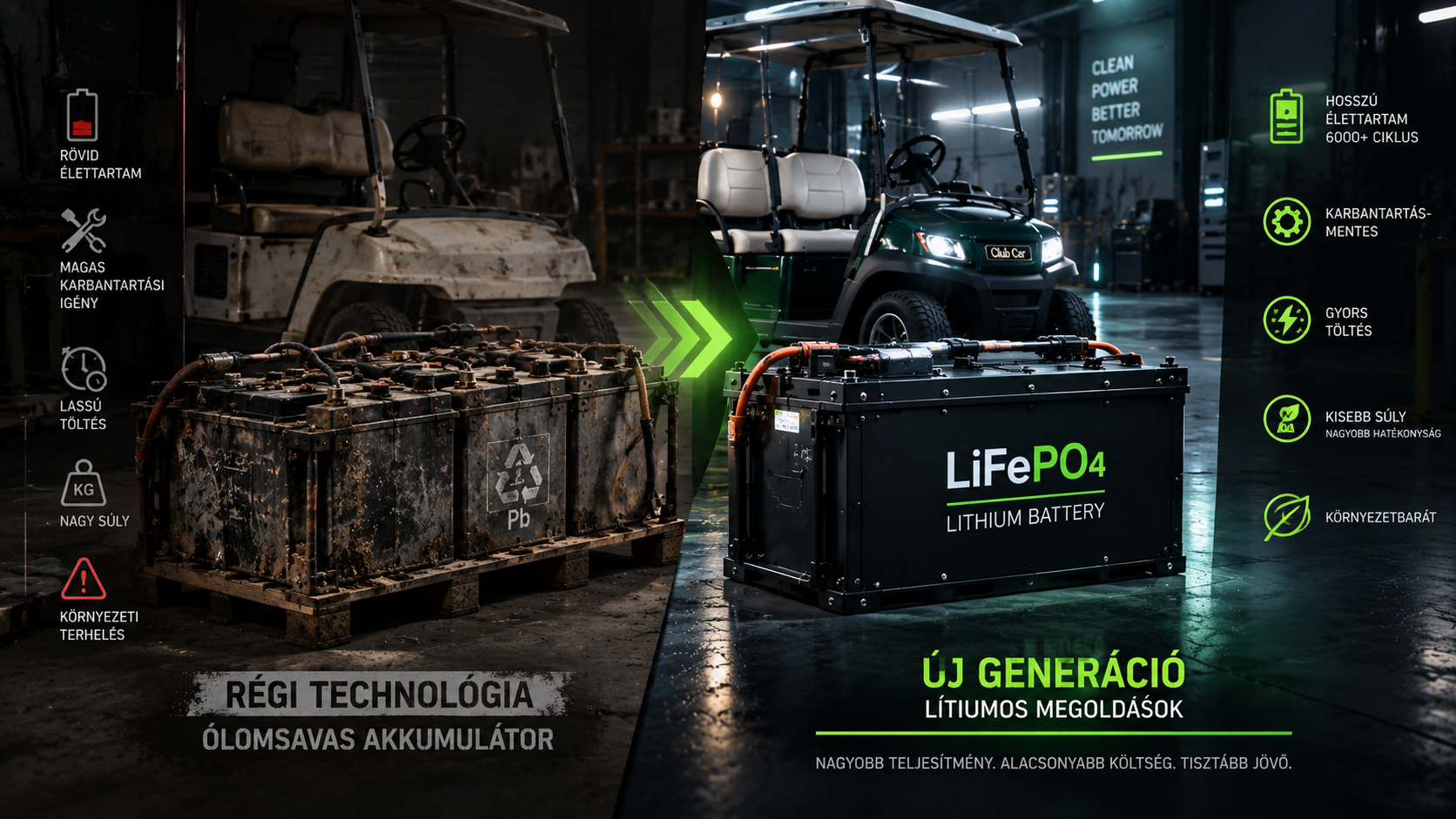
The vast majority of electric golf carts, minibuses and transport vehicles still use lead-acid batteries today. However, lithium iron phosphate (LiFePO4) technology has become an affordable and mature alternative. In this article, we look at the differences between the two and what you should consider if you are thinking about making the switch.
What Is LiFePO4?
LiFePO4 is a type of lithium-ion battery in which the cathode material is lithium iron phosphate. In practice, this means stable, easy-to-manage cell chemistry: it is less prone to overheating and can withstand many charging cycles. The batteries are protected by a built-in Battery Management System (BMS) against overcharging, deep discharge and overcurrent.
How Is It Different from Lead-Acid?
- Weight. For the same amount of energy, the battery is significantly lighter, which has a direct impact on range and driving dynamics in a golf cart or minibus.
- Usable capacity. Lead-acid batteries should not be deeply discharged, while LiFePO4 batteries allow you to use a much larger proportion of their rated capacity.
- Maintenance. No electrolyte level checks and no topping up are required.
- Charging. LiFePO4 batteries can be charged faster and do not need to be fully discharged before recharging.
What Should You Consider When Switching?
There are three main things to consider. The first is voltage:the battery must match the system voltage of the vehicle (for example, a 38.4V battery for a 36V system or a 51.2V model for a 48V system). The second is capacity:how long or how far you need to travel on a single charge. The third is installation:the dimensions and mounting of the battery, the connector configuration, and whether the existing charger is suitable for charging a lithium battery.
What’s Next?
If you are not sure which model is right for your vehicle, don’t guess. Tell us what type of vehicle you have and how you use it, and we’ll review the options for you. We also offer on-site assessments. Request a quoteor browse our termékeinket.